Who Is Roger Williams? The Man Who Shaped Religious Freedom in America
Roger Williams is one of the most influential—and least understood—figures in American history. Often overlooked in classrooms and popular narratives, Williams was a 17th‑century Christian minister, theologian, and political thinker whose radical ideas laid the foundation for religious liberty, freedom of conscience, and the separation of church and state in the United States.
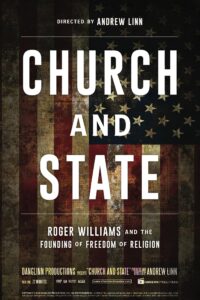
The documentary Church and State: Roger Williams and the Founding of Freedom of Religion explores his extraordinary life, his biblical convictions, and his lasting impact on American constitutional principles.
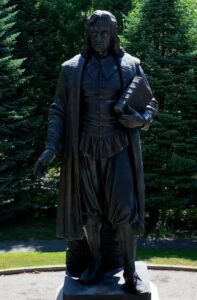
Roger Williams: Early Life and Christian Convictions
Born in England around 1603, Roger Williams was educated at Cambridge University and trained as an Anglican minister. From an early age, he developed a deep commitment to Scripture and a belief that true faith must be voluntary—not enforced by government or church authorities.
Unlike many religious leaders of his time, Williams believed that civil government had no authority over the conscience of individuals. This conviction would place him at odds with both the Church of England and the Puritan leadership of colonial New England.
Why Roger Williams Was Banished from Massachusetts
After emigrating to the Massachusetts Bay Colony in 1631, Roger Williams quickly became controversial. He openly challenged the colony’s leaders on several key issues:
- The idea of a state‑supported church
- The punishment of people for religious beliefs
- The belief that civil authorities could enforce Christian doctrine
- The legitimacy of land claims taken from Native Americans without fair purchase
Williams famously argued that mixing church and government corrupted both—a belief he described as building a “hedge or wall of separation” to protect the church from the state.
In 1635, Massachusetts leaders declared his views dangerous. Roger Williams was banished in the dead of winter, forced to flee into the wilderness rather than submit his conscience to government authority.
Founding Rhode Island: A Haven for Religious Freedom
After his banishment, Roger Williams established a new settlement that would become Rhode Island, founded on a revolutionary principle: full religious liberty for all people.
Under Williams’ leadership, Rhode Island welcomed:
- Christians of differing denominations
- Baptists and Quakers
- Jews
- Those with no religious affiliation at all
This made Rhode Island the first place in the Western world to guarantee freedom of conscience as a civil right.
Williams also insisted on fair treatment of Native Americans (seeking to convert them to Christianity) learning their languages and advocating peaceful coexistence—another radical stance for his time.
Roger Williams and the Separation of Church and State
The phrase “separation of church and state” is often misunderstood or misused in modern debates. Roger Williams did not promote hostility toward religion; rather, he believed that faith flourishes best when free from government control.
Williams argued that when governments enforce religion, they produce hypocrisy, persecution, and spiritual loss. His writings strongly influenced later thinkers and directly shaped American ideas about religious liberty.
These principles eventually found expression in the First Amendment to the U.S. Constitution, particularly the clauses protecting the free exercise of religion and prohibiting the establishment of a national church.
Roger Williams’ Influence on the First Amendment
Although Roger Williams lived more than a century before the American Revolution, his ideas profoundly shaped the Founding Fathers. Figures such as James Madison and Thomas Jefferson echoed Williams’ arguments when crafting America’s constitutional protections for religious freedom.
Williams’ belief that government exists to protect civil order—not to save souls—became a cornerstone of American democracy.
Why Roger Williams Matters Today
In an era of increasing polarization over religion and politics, Roger Williams’ life offers timeless wisdom. He reminds us that:
- Religious liberty protects believers and non‑believers alike
- Government control of faith harms true Christianity
- Freedom of conscience is essential to a free society
As America approaches its 250th anniversary, rediscovering Roger Williams helps us better understand the original meaning of religious freedom—and why it remains vital today.
Roger Williams in Church and State: Roger Williams and the Founding of Freedom of Religion
The documentary Church and State brings Roger Williams’ story to life through historical analysis, expert interviews, and modern reflection. It challenges common myths about the separation of church and state and reveals how a deeply Christian worldview helped give rise to one of America’s greatest freedoms.
By examining Roger Williams’ faith, courage, and convictions, the film invites viewers to reconsider how liberty of conscience became a defining American principle.
Learn More
To watch the documentary, host a screening, or explore additional resources about Roger Williams, you can Watch the Film and use the link for Free Below