Who is Tim Hall? Timothy L. Hall is a legal scholar, author, and former university president whose work explores Roger Williams, religious liberty, and the historical relationship between church and state in America.
Hall is the author of Separating Church and State: Roger Williams and Religious Liberty, a book examining Williams’ influential arguments for freedom of conscience and the separation of religious and civil authority.
He is also a featured expert in the documentary Church and State: Roger Williams and the Founding of Freedom of Religion, where he provides historical and legal insight into Williams’ legacy and its significance for American religious freedom.

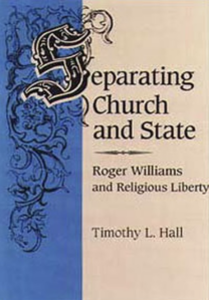 Best Selling Book on the Separation of Church and State
Tim Hall is a legal scholar, academic leader, and author best known for his book
Separating Church and State: Roger Williams and Religious Liberty, a foundational work examining how Roger Williams shaped America’s earliest and most radical commitment to religious freedom.
As President Emeritus of Mercy University, Hall brings both scholarly rigor and institutional leadership experience to the study of religious liberty, civil authority, and moral conscience. His work is grounded in primary sources and historical context rather than modern political interpretation.
Tim Hall’s Role in Church and State
In Church and State: Roger Williams and the Founding of Freedom of Religion, Tim Hall offers authoritative insight into what separation of church and state originally meant—and why it was revolutionary.
Hall explains that Roger Williams:
-
Advocated full freedom of conscience for all beliefs
-
Rejected government-controlled religion
-
Believed faith must remain voluntary to remain authentic
-
Warned that state power corrupts religion when the two are merged
His contribution reinforces the documentary’s central thesis:
Separation of church and state was designed to protect religion from government—not to erase faith from society.
Roger Williams and the Birth of Religious Liberty in America
Tim Hall’s scholarship places Roger Williams at the center of America’s religious liberty tradition. Long before the First Amendment, Williams argued that civil authorities had no jurisdiction over the soul.
Hall documents how Williams:
-
Founded Rhode Island as a haven for religious dissenters
-
Defended liberty for Christians, Jews, Muslims, and non-believers
-
Influenced later American thinking on church–state relations
These ideas became essential to the development of religious freedom in America, shaping the principles later embedded in the U.S. Constitution.
Separating Church and State: Myth vs. History
A key contribution of Tim Hall’s work is correcting modern misunderstandings of church–state separation.
According to Hall’s research:
-
Separation did not mean hostility toward religion
-
It meant non-coercion and protection of conscience
-
It prevented state-run churches and religious persecution
-
It allowed faith to flourish freely without government interference
Church and State uses Hall’s legal acumen to distinguish original intent from modern reinterpretations.
Why Tim Hall’s Scholarship Matters Today
As the United States approaches its 250th anniversary, Tim Hall’s work is increasingly relevant. Debates over religious liberty, church and state, and freedom of conscience remain central to American public life.
Hall’s scholarship reminds us that:
-
Liberty requires limits on government power
-
Religious freedom protects diversity, not dominance
-
America’s founding principles were shaped by moral and philosophical convictions
His voice in Church and State helps anchor modern debates in historical reality rather than ideology.
Watch Church and State: Roger Williams and the Founding of Freedom of Religion
Church and State features Tim Hall alongside historians, scholars, and original documents to tell the true story of religious liberty and church–state separation in America.
🎬 Watch the documentary on YouTube below